
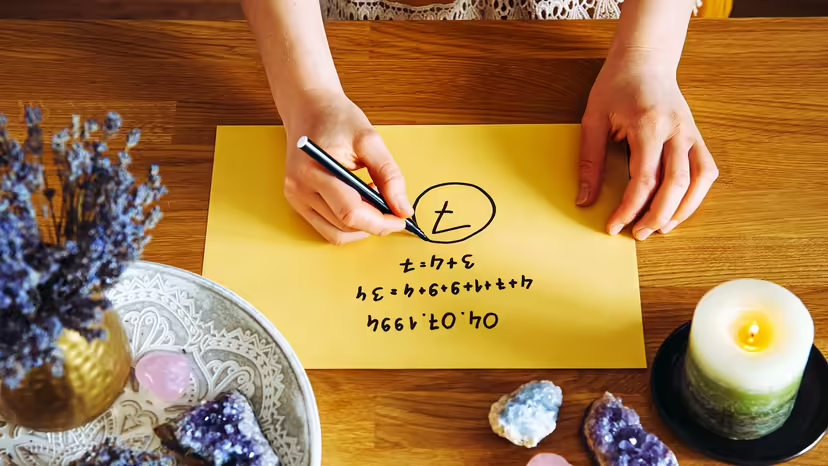
Some interesting facts about Numerology reveal that numbers have always played a far greater role in human life than simple counting. From ancient civilizations to modern digital societies, numbers have been viewed as symbols of meaning, order, and guidance. Numerology is the study of how numbers influence human personality, emotions, behavior, and life direction. It is based on the belief that everything in the universe vibrates at a specific frequency—and numbers carry their own unique vibrations.
Throughout history, people across cultures have used Numerology as a tool for understanding themselves and the world around them. Ancient scholars believed that numbers reflected universal laws governing both nature and human existence. Even today, Numerology remains popular as a system for self-reflection, personal growth, and conscious decision-making. Unlike superstition, Numerology follows structured calculations that anyone can learn and apply. It does not promise miracles or exact predictions; instead, it offers insight into strengths, challenges, and natural tendencies.
This article explores some interesting facts about Numerology in depth, explaining why this ancient system has survived for thousands of years and why it continues to attract people worldwide.
The Ancient Origins of Numerology
Numerology begin with its deep roots in ancient history. Early civilizations viewed numbers as sacred symbols rather than simple tools. In ancient Egypt, numbers were carefully used in architecture—especially in pyramids—to reflect cosmic harmony and divine order. In Mesopotamia, numbers guided calendars, astronomy, and religious rituals. These civilizations believed that numerical balance maintained stability in both nature and society.
Key ancient beliefs included:
- Numbers represented spiritual and cosmic laws
- Temples and monuments followed precise numerical ratios
- Mathematics and belief systems evolved together
India also played a foundational role in Numerology. Hindu philosophy connected numbers with consciousness, karma, and spiritual evolution. Later, the Greek philosopher Pythagoras introduced Numerology to the Western world. He believed numbers were the building blocks of reality and that human personality could be understood through numerical patterns. His teachings connected mathematics, music, and the soul, shaping Numerology as a philosophical system.
As Numerology spread through Europe, the Middle East, and Asia, cultural interpretations varied, but the core belief remained the same: numbers influence life. This shared understanding explains why Numerology has endured across centuries and civilizations.
Numerology as a Universal Language

Some interesting facts about Numerology highlight its universal nature. Numbers are understood the same way across cultures and borders. Unlike spoken languages, numbers do not change from country to country, making Numerology accessible worldwide.
Key universal aspects include:
- Numbers are culturally neutral
- Calculations remain consistent globally
- Core meanings remain largely unchanged
A life path number calculated in one country remains the same anywhere else. This consistency builds trust in Numerology systems. While interpretations may vary slightly across traditions, the fundamental meanings of numbers remain stable. Numerology does not require religious belief; it functions as a symbolic and logical system. This balance between logic and intuition allows Numerology to feel both personal and universal.
How Numerology Works: Core Principles Explained
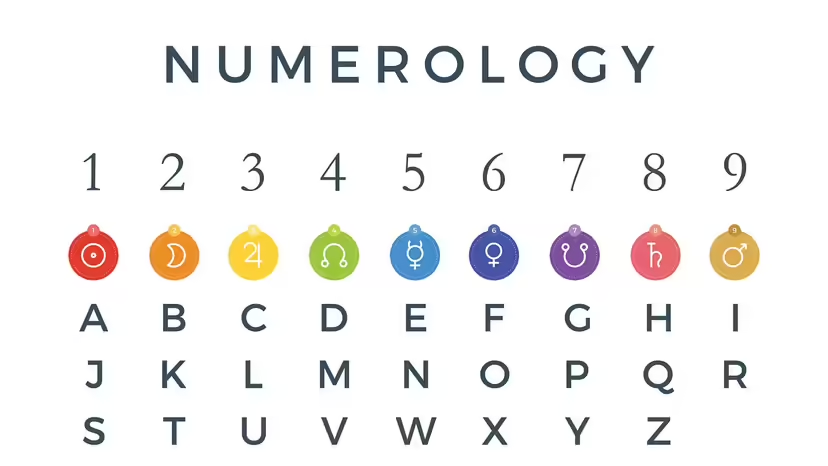
Some interesting facts about Numerology explain how the system actually works. Numerology converts letters and dates into numerical values. Each number carries a specific vibration that reflects personality traits, emotional tendencies, and life themes.
Most Numerology systems reduce numbers to single digits from 1 to 9. Certain combinations form master numbers—11, 22, and 33—which are not reduced because they carry intensified energy and responsibility.
Common Numerology calculations include:
- Life Path Number
- Name Number
- Destiny Number
- Soul Urge Number
- Birth Number
Each number represents a different aspect of life. Numerology does not control fate; it highlights patterns and tendencies. Personal choices and effort still shape outcomes.
The Meaning of Numbers 1 to 9 in Numerology
Some interesting facts about Numerology lie in the symbolic meanings of numbers. Each number carries a unique energy that influences behavior and personality.
|
Number |
Meaning | Key Traits |
| 1 | Leadership |
Independence, ambition |
| 2 | Balance |
Cooperation, sensitivity |
|
3 |
Expression | Creativity, communication |
|
4 |
Stability | Discipline, structure |
|
5 |
Freedom | Change, adaptability |
|
6 |
Responsibility |
Care, harmony |
| 7 | Wisdom |
Analysis, spirituality |
| 8 | Power |
Authority, success |
| 9 | Completion |
Compassion, service |
These meanings help explain personality patterns. Numbers do not limit individuals; they highlight tendencies. Understanding them encourages conscious growth and balance.
Master Numbers and Their Special Power
Some interesting facts about Numerology emphasize master numbers—11, 22, and 33. These numbers carry stronger vibrations and greater potential.
- 11 represents intuition and spiritual insight
- 22 focuses on building, leadership, and achievement
- 33 symbolizes compassion, service, and healing
People with master numbers often experience intense challenges. These numbers demand awareness and responsibility. When balanced, they lead to meaningful contributions. When ignored, they can cause stress and confusion. Master numbers represent potential, not guaranteed success.
The Influence of Names in Numerology
Some interesting facts about Numerology explain that a person’s name carries a powerful vibrational influence. In Numerology, each letter corresponds to a specific number, and together these numbers form a name number that reflects how a person expresses themselves in the world. Unlike birth date numbers, which represent innate qualities, name numbers show how an individual interacts with society, communicates, and presents their identity.
- The first letter of a name often represents outward behavior and first impressions. It influences how others initially perceive a person.
- The middle letters relate to emotional responses, inner sensitivity, and personal reactions.
- While the last letter reflects logical thinking, problem-solving style, and decision-making patterns. This layered structure explains why people may feel different internally than how they appear externally.
Name Numerology also explains why people sometimes feel a shift after changing their name, adopting a nickname, or even using a shortened version of their name. While a name change does not alter one’s core identity or life path, it can subtly influence confidence, communication style, and emotional expression. For example, a softer-sounding name may enhance sensitivity, while a stronger vibration may promote leadership and assertiveness.
Importantly, the name Numerology is not about labeling or limiting a person. Instead, it offers awareness. Understanding one’s name vibration can help improve self-expression, social interaction, and personal confidence. It can also explain recurring communication challenges or strengths.
In professional and personal settings, this awareness can be empowering. Many people use the name Numerology to understand how they are perceived by others and how they can align their communication with their true nature. This insight makes name Numerology a valuable tool for personal growth rather than a rigid system.
Life Path Numbers and Life Direction
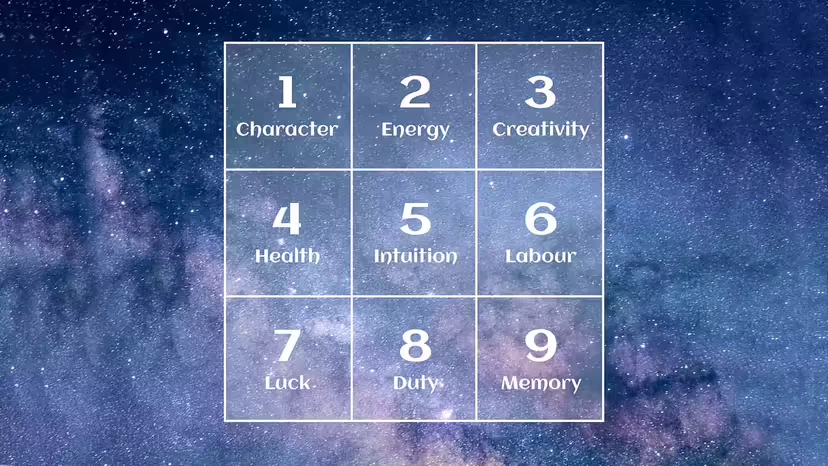
Some interesting facts about Numerology emphasize the importance of the life path number, often considered the most significant number in a Numerology chart. It is calculated using the full birth date and represents the overall direction, themes, and lessons of a person’s life. Unlike predictions, the life path number describes tendencies rather than fixed outcomes.
Life path numbers reveal natural strengths, recurring challenges, and the types of experiences a person may encounter repeatedly. For example, some life paths emphasize leadership and independence, while others focus on cooperation, creativity, or service to others. These themes often appear consistently throughout different life stages.
One of the most valuable aspects of the life path number is its ability to bring clarity during confusion. When individuals feel uncertain about career choices, relationships, or personal direction, understanding their life path can provide guidance. It helps people recognize which environments support their growth and which may cause resistance or dissatisfaction.
- Life path numbers do not remove free will. Instead, they act as a roadmap. Two people with the same life path may live very different lives depending on their choices, effort, and awareness. Numerology highlights potential, not guarantees.
By understanding their life path number, individuals can align decisions with their natural abilities and values. This alignment often leads to greater satisfaction, reduced inner conflict, and a stronger sense of purpose. Life path Numerology encourages conscious living rather than passive acceptance of circumstances.
Destiny Numbers and Purpose
Some interesting facts about Numerology explain that destiny numbers reveal long-term purpose and personal development. Derived from the full birth name, the destiny number reflects what a person is meant to grow into over time rather than what they are born with.
While the life path number shows the journey, the destiny number shows the destination. It represents the skills, talents, and roles that gradually unfold through experience. Many people do not fully express their destiny early in life. Instead, it becomes more prominent with maturity, learning, and self-awareness.
- Destiny numbers often relate to career paths, leadership styles, and the way individuals contribute to society. For example, some destiny numbers emphasize communication, teaching, or creativity, while others highlight organization, authority, or service. These tendencies do not limit career choices but suggest areas where effort may feel more natural and rewarding.
- One important aspect of destiny numbers is growth through responsibility. As people face challenges, their destiny number guides how they respond and evolve. Ignoring this number may lead to dissatisfaction, while embracing it encourages fulfillment.
Destiny Numerology is not about fate controlling life. It provides insight into potential development. Understanding this number helps individuals set realistic goals, recognize hidden talents, and make choices aligned with their deeper purpose.
Soul Urge Numbers and Inner Motivation
Some interesting facts about Numerology highlight soul urge numbers as the most emotionally revealing numbers in a chart. Calculated using the vowels in a person’s full name, the soul urge number reflects inner desires, emotional needs, and what truly brings fulfillment.
Unlike outward personality traits, the soul urge number operates beneath the surface. It explains why a person may appear confident yet feel unfulfilled, or successful yet emotionally restless. This number represents what the heart seeks rather than what society expects.
- Soul urge numbers influence emotional satisfaction, relationships, and motivation. When people ignore their soul urge, they may experience frustration, boredom, or a sense of emptiness despite external achievements. Aligning with this number often brings emotional balance and inner peace.
- For example, some soul urge numbers crave freedom and variety, while others seek stability, harmony, or spiritual depth. Understanding this helps individuals make choices that nurture emotional well-being rather than just external success.
Soul urge Numerology encourages authenticity. It reminds people to honor their inner needs and values. By aligning actions with emotional truth, individuals can experience deeper satisfaction and meaningful relationships.
Numerology and Relationships
Some interesting facts about Numerology show its value in understanding relationships. Numerology compares key numbers between individuals to reveal compatibility, communication styles, and emotional dynamics.
Rather than labeling relationships as good or bad, Numerology explains differences. For example, one partner may value independence, while another prioritizes emotional connection. Understanding these tendencies reduces misunderstandings and conflict.
Relationship Numerology helps in:
- Improving communication
- Increasing empathy
- Recognizing emotional needs
It is useful for romantic relationships, friendships, family bonds, and even professional partnerships. Numerology does not guarantee success or failure. Instead, it promotes awareness.
By understanding numerical differences, people learn to respect individuality. This awareness strengthens trust and cooperation. Numerology encourages growth together rather than blame.
Numerology vs Astrology
Some interesting facts about Numerology compare it with astrology, as both systems analyze patterns in human life. Numerology focuses on numbers and personal vibrations, while astrology studies planetary movements and zodiac signs.
It emphasizes personality and inner tendencies, while astrology often focuses on timing and external influences. Numerology is simpler to calculate and does not require complex charts.
Many people use both systems together for a broader perspective. Numerology explains “who you are,” while astrology explains “when things happen.” Together, they offer balanced insight.
Numerology Across Cultures
Some interesting facts about Numerology reveal its cultural diversity. Different societies attach symbolic meaning to numbers. For example, China values number 8 for prosperity, while Japan avoids number 4 due to its association with loss.
Despite cultural variations, the symbolic power of numbers remains universal. This adaptability allows Numerology to survive across traditions, religions, and time periods.
Numerology in the Digital Age
Some interesting facts about Numerology show how technology has transformed its accessibility. Online tools, apps, and calculators allow instant Numerology charts.
Social media has expanded awareness, allowing people worldwide to explore Numerology easily. Digital platforms keep ancient wisdom relevant in modern life.
Common Myths About Numerology
Numerology dispel misconceptions. Numerology does not predict exact events, control fate, or replace effort. It is a reflective tool, emphasizing self-awareness rather than deterministic outcomes.
Other myths include the idea that Numerology only works if you believe, or that it is a superstition tied to a single culture. In reality, it combines structured calculations with symbolic interpretation and is adaptable across religions, cultures, and belief systems. Using Numerology responsibly encourages insight, self-reflection, and thoughtful decision-making.
Why Numerology Still Matters Today
Numerology explain its lasting appeal. Numerology helps people reflect, not escape reality.
- Encourages self-awareness
- Supports personal growth
- Offers clarity
In a fast-changing world, Numerology provides structure. Numbers remind people that patterns exist. This timeless relevance keeps Numerology meaningful across generations.
Faqs About Numerology
Wrap-Up: The Timeless Power of Numbers
Some interesting facts about Numerology confirm that numbers remain powerful tools for understanding life. From personality insight to relationship awareness, Numerology offers a universal framework for self-reflection. Whether viewed spiritually or analytically, Numerology encourages thoughtful decision-making and personal growth.
Its survival across centuries and cultures proves its timeless value. Numbers are more than symbols—they are guides that help individuals understand themselves, navigate challenges, and embrace their life journey with clarity and purpose.