Top 10 Countries Where People Feel Safest Walking at Night. The world today is full of contradictions. We are witnessing the highest number of armed conflicts since World War II. Political polarisation is increasing. Trust in governments has fallen to historic lows. And yet, according to the new Gallup 2025 Global Safety Report, people around the world feel safer than they have in the past two decades.
How to Manage Stress Through Mindfulness Meditation. In our daily conversations, the phrase “I’m stressed” often rolls off our tongues without grasping the full extent of its implications.
This surprising result challenges our assumptions about what safety really means in today’s world.
Redefining Safety in 2025
Gallup’s report is based on more than 145,000 interviews in 144 countries. It finds that a sense of security is shaped less by international headlines and more by the daily experience of life. The most important factors are the strength of institutions, the reliability of infrastructure and the health of local communities.
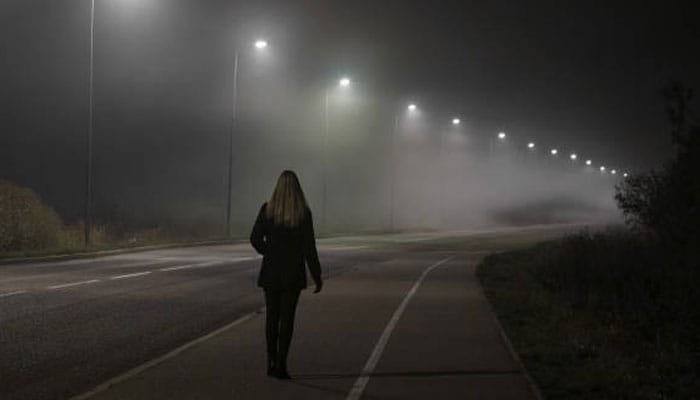
In many countries, safety is not just about the absence of crime. It is about whether people feel they can rely on the systems and people around them. That feeling is what builds confidence — including the ability to walk alone at night without fear.
About Gallup & the Report
Gallup is a global analytics and advisory firm that has been tracking global perceptions of safety since 2006. Its Global Safety Report is released each year and is based on nationally representative surveys. This makes it one of the most trusted sources for understanding how safe people feel in their own countries.
The data comes from the Gallup World Poll, which is a continuous global survey. For this edition, Gallup gathered responses from over 145,000 adults aged 15 and above. These surveys covered 144 countries and territories, making the findings truly global in scope.
Each respondent answered the same four questions. These were about whether they felt safe walking alone at night, whether they trusted their local police, and whether they or their household had recently experienced theft, assault or mugging.
The Top 10 Safest Countries to Walk Alone at Night
Gallup’s results show that some countries stand out for how safe their citizens feel after dark. The highest-ranking country is Singapore, where 98 per cent of people say they feel safe walking alone at night. Tajikistan follows with 95 per cent, then China and Oman, both at 94 per cent. Saudi Arabia scores 93 per cent. Hong Kong, Kuwait and Norway each come in at 91 per cent. Bahrain and the United Arab Emirates round out the top 10, each at 90 per cent.
These countries offer different models of safety, but they share one thing in common: daily life feels secure and predictable for most people.
What Makes These Countries Feel Safe
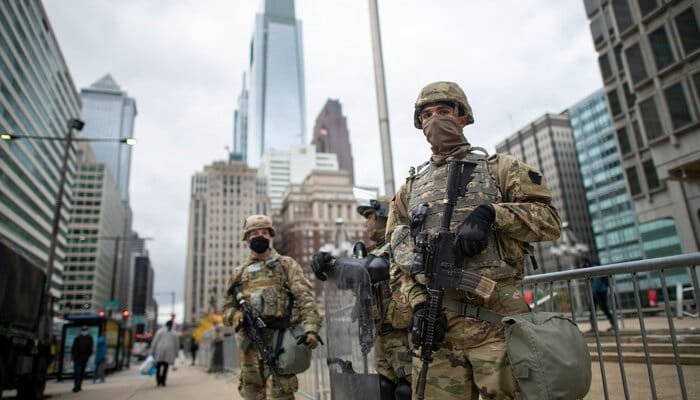
In Singapore, China and many Gulf countries, safety is closely linked to centralised governance and strong law enforcement. These places have high investment in infrastructure and visible security systems. The presence of authority is part of the social environment. People often feel that rules are enforced and that order is maintained. This creates a sense of predictability, which supports everyday confidence.
In contrast, Norway offers a different path to safety. There, the high score is less about enforcement and more about community trust. People in Norway generally believe in their institutions and in one another. There is a sense of shared responsibility and social cohesion. These factors reduce fear and promote safety without heavy policing.
Together, these examples show that safety is built in many ways. Whether through legal systems, social trust or public infrastructure, the result is the same: people feel their environment is secure and dependable.
Global Trends in Perception of Safety
The top-performing countries all score above 90 per cent and are mostly located in East Asia, the Gulf and Northern Europe. These are areas where trust in institutions is high, or where enforcement and security presence is strong. People in these countries are far more likely to feel safe walking alone at night.
In the middle range are countries like India, which scores 72 per cent. This is the same score as Bulgaria, Cyprus and Libya. While this is above the global average, it also points to ongoing challenges. In India, issues like urban crowding, infrastructure gaps and social inequality still affect how safe people feel.
At the lower end of the scale are many countries in Latin America and sub-Saharan Africa. Brazil scores 51 per cent, Nigeria 53 per cent and South Africa just 33 per cent. These regions continue to struggle with crime, corruption and political instability. These problems make people less confident in their day-to-day safety, especially at night.
Final Thoughts: Safety Built From the Ground Up
Gallup’s 2025 Global Safety Report offers a powerful reminder that safety is about more than the absence of violence. It is about trust — in people, in public systems, and in the social fabric of daily life. Even in a world full of tension and uncertainty, people in many places are finding ways to feel secure. The foundations of safety are built from the ground up, not from headlines or statistics.
This year’s report challenges governments, city planners and communities to rethink how we create environments that feel safe. Whether through stronger institutions, better infrastructure or deeper social cohesion, the goal is the same: to help people live without fear — even after dark.