
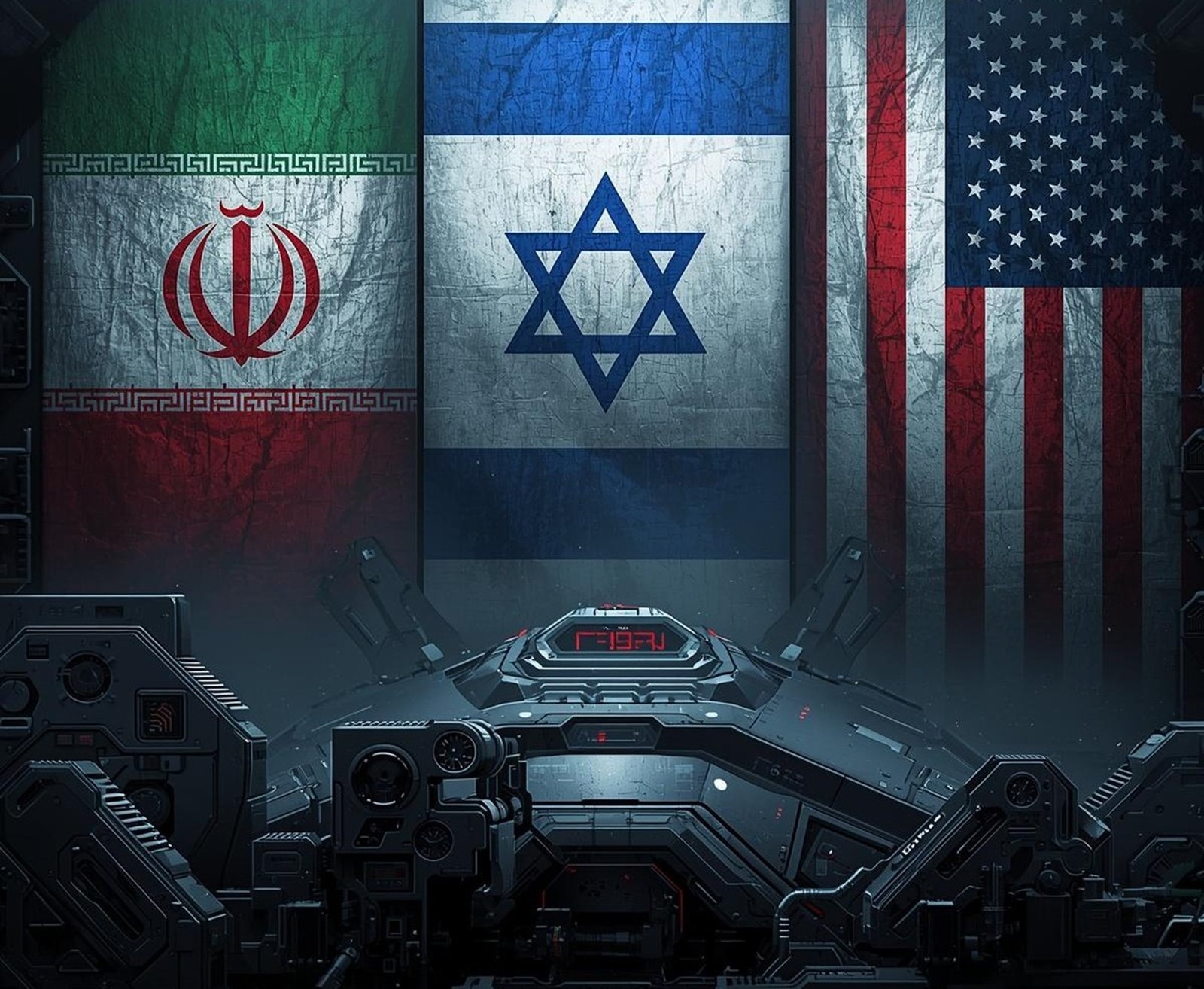
The Middle East has reached an unprecedented level of risk. Israel conducted its first attack just outside of Iran on June 13, 2025 (Operation Rising Lion) with a series of airstrikes against Iranian military and nuclear installations. On June 22, 2025, the United States began its own missile attack campaign against Iranian military installations. In turn, Iran launched drone and missile attacks in retaliation on June 22, 2025.
A ceasefire was accomplished on June 24, 2025. By early 2026, both Israel and the United States had again launched successive offensive operations targeting Iran’s reconstituted nuclear and missile programs that resulted in many Iranian nuclear and missile facilities being destroyed.
Given the significant intensity of military conflicts currently occurring and the potential for war to continue to escalate in severity, it is imperative to provide a factual and definitive answer to the question of who currently possesses real military power in the Middle East. The data and verified resources available for discussion are reflective in the table provided below.
Iran vs Israel vs United States: Military Rankings in 2026
The Global Firepower Index 2026 ranks 145 countries across dozens of military indicators. A lower score indicates stronger capability. According to GlobalFirepower.com, the rankings currently stand as follows:
- United States — Rank #1, PowerIndex score 0.0741
- Israel — Rank #15, PowerIndex score 0.2707
- Iran — Rank #16, PowerIndex score 0.3199
Iran and Israel sit just one rank apart, but that number masks a very large gap in the type of military power each country wields. Iran leads in manpower, tanks, and sheer volume of missiles. Israel leads in technology, precision, and air power. The United States leads in everything.
United States Military Strength and Defense Budget
The US military operates on a scale no other nation can match. In fiscal year 2026, US discretionary defense spending surpassed $1.05 trillion, an increase of more than 17 percent over the previous year, according to the Arms Control Association. The Pentagon’s standalone budget request for FY2026 was $892.6 billion.
Active military personnel number approximately 1.33 million. The US Air Force operates over 13,000 aircraft and the US Navy maintains 11 aircraft carrier strike groups, each one a mobile military base capable of projecting force anywhere on earth.
Regarding nuclear weapon capability, the United States possesses 3700 warheads that are currently deployed in operational standing and 5100-5200 (five thousand one hundred to five thousand two hundred) as total stockpiles; the Federation of American Scientists estimate does not distinguish between these two amounts.
The Congressional Budget Office estimates that the United States will spend $946 billion beginning in (fiscal) 2025 through 2034, to modernize its nuclear triad: B-21 (Bomber 21) Raider stealth bomber, Columbia-class (submarine) and LGM-35A missile. In addition, the Trump Administration is requesting $25 billion in year 2026 to develop a new “Golden Dome” (home) missile defense system.
Well, in the June 2025 conflict, US B-2 bombers conducted bunker-buster strikes on Iran’s underground nuclear sites at Natanz, Fordow, and Isfahan. In the February 2026 offensive, US and Israeli aircraft flew as coordinated equal partners across the campaign — a level of joint operational integration unprecedented between the two allies.
Israel Military Capabilities and Air Defense Systems
While Israel has a reputation for advanced military technology (weapons) relative to many other nations and has developed sophisticated military capabilities through the Israeli Defense Forces (IDF The Israel Defense Forces (IDF) operate on a 2026 defense budget of $34 billion and maintain foreign reserves of $204.6 billion.
As of June 2025, the Israeli Air Force operated a fleet of 611 aircraft and had 240 fighter jets (F-35I), which allows them to perform air strikes and provide electronic warfare capabilities together with suppression of enemy air defences. Additionally, in June 2025, the IAF conducted 200 aircraft in multiple simultaneous sorties as part of the largest IAF deployment in IAF history using the F-35I, and it achieved complete aerial supremacy over Iran within a few days of that operation.
Israel’s defining defensive advantage is its layered missile defense architecture:
- Iron Dome — intercepts short-range rockets and artillery shells
- David’s Sling — targets medium-range ballistic and cruise missiles
- Arrow 2 and Arrow 3 — intercepts long-range ballistic missiles inside and outside the atmosphere
These three systems, reinforced by US SM-3 interceptors and THAAD batteries during peak exchanges, successfully neutralized the majority of Iranian missile salvos in 2024 and 2025. Israel also operates 5 submarines capable of long-range strikes, adding a silent second-strike dimension to its deterrence posture.
Iran Military Power: Missiles, Manpower, and Asymmetric Strategy
Iran’s military strategy is built on the recognition that it cannot match US or Israeli technology directly. Instead, it compensates through volume, asymmetry, and the ability to sustain operations under pressure.
As per the (IISS) Military Balance 2025 (report published by the International Institute for Strategic Studies), Iran’s armed forces are structured with approximately 610,000 active military personnel (which includes approximately 190,000 members belonging to the Islamic Revolutionary Guard Corps (IRGC)) who oversee Iran’s missile and drone program as well as coordinate the regional proxy network for Iran. Additionally, Iran has approximately 350,000 reservists who would supplement its forces should they require additional assistance during an armed conflict or war.
Iran’s air force is its weakest conventional branch, operating only around 250 combat-capable aircraft, many of them aging pre-1979 platforms. Where Iran genuinely competes is in missiles. Before the June 2025 war, the US Central Command estimated Iran held over 3,000 ballistic missiles. After heavy losses in 2024 and 2025 exchanges, Israeli officials estimated Iran’s remaining arsenal at approximately 1,500 missiles and 200 launchers by the war’s end.
Iran has since been rebuilding, reportedly replenishing stocks to around 2,000 missiles by early 2026 according to Wikipedia’s updated ballistic missile program entry, and purchasing sodium perchlorate from China to fuel further production.
Iranian Targets
Many of Iran’s longest-range rockets, many of them carrying a payload of 1,500 kg, will specifically target Israel from Iran. The Khorramshahr-4 is an example of this type of rocket; it will have a range of 2,000 km and could potentially reach many locations around the Middle East including U.S. military installations throughout the Gulf.
Iran has built substantial numbers of these rockets into complex underground storage facilities known as “missile cities.” These facilities have been designed to withstand air attacks and thus provide Iran with a capability of launching a second wave of attacks after having launched the initial missile strike.
At sea, Iran operates 107 naval vessels including 25 submarines in the Persian Gulf and the Strait of Hormuz — a chokepoint through which a significant share of the world’s oil and gas passes. This gives Iran meaningful leverage over global energy markets even when outmatched in open combat.
Iran’s defense budget of approximately $15.45 billion is stretched across conventional forces, missile production, drone warfare, cyber operations, and its regional proxy network — Hezbollah in Lebanon, Houthi forces in Yemen, and militia groups across Iraq and Syria.
Iran Nuclear Program: What We Know in 2026
Iran is a major concern for the US and Israel, as both countries develop military strategies based on worries about Iran’s potential for constructing nuclear weapons. On June 13, 2025, Israel launched airstrikes targeting Iran’s nuclear and military infrastructure. The United States joined the campaign on June 22, conducting bunker-buster strikes on the Natanz, Fordow, and Isfahan facilities, after US intelligence assessed Iran was less than one week away from producing enough fissile material for a nuclear weapon.
By that time, Us intelligence indicated that Iran had a level of uranium enrichment of 60% (very close to the MDL) and Iran was any day away from reaching the point of being able to produce a weapon’s grade level of 90%, which is the required purification level for most modern nuclear weapons.
In June 2025, the US and Israel conducted airstrikes against three Iranian facilities, including Natanz, where uranium is enriched; Fordow, where uranium is processed; and Isfahan, which has the capability of producing conventional weapons as well as ballistic missiles and nuclear weapons. Following the airstrikes, Donald Trump said the Iranian nuclear program had been “successfully neutralized”; however, early assessments made at the beginning of 2026 show this to be inaccurate.
The IAEA had no conclusive evidence of a well-developed nuclear weapons program in Iran, but they were also unable to conduct a comprehensive inspection of all the facilities that the U.S. and Israel attacked.
In February 2026, the further military offensive by the U.S. and Israel was aimed at eliminating any remaining ballistic missile capabilities and any remaining nuclear facilities — that had been reconstituted.
According to the Council on Foreign Relations, uncertainty surrounding Iran’s nuclear ambitions and capabilities is destabilizing. In fact, many analysts believe that the potential existence of nuclear weapons in Iran poses what some call an existential threat to the state of Israel and therefore drives the continued military interventions by both the U.S. and Israel in the region.
Iran vs Israel vs US: Who Has the Military Advantage?
On raw numbers, Iran is larger. On technology and precision, Israel leads the region. And on every metric combined, the United States has no peer.
In the June 2025 war, the US-Israel alliance demonstrated it could achieve aerial dominance over Iran, destroy its air defenses, and strike hardened nuclear facilities — all without confirmed pilot losses. What that conflict also showed is that destroying Iran’s military infrastructure in a 12-day campaign does not end Iran’s capacity to threaten. Iran adapted, rebuilt, and resumed operations.
Iran’s military power today rests on its ability to impose costs through missiles, drones, proxies, and maritime disruption, even while absorbing significant damage. That asymmetric resilience makes it a persistent threat regardless of the outcome of any single campaign. The balance of power in the Middle East will continue to be defined by this tension for years to come.