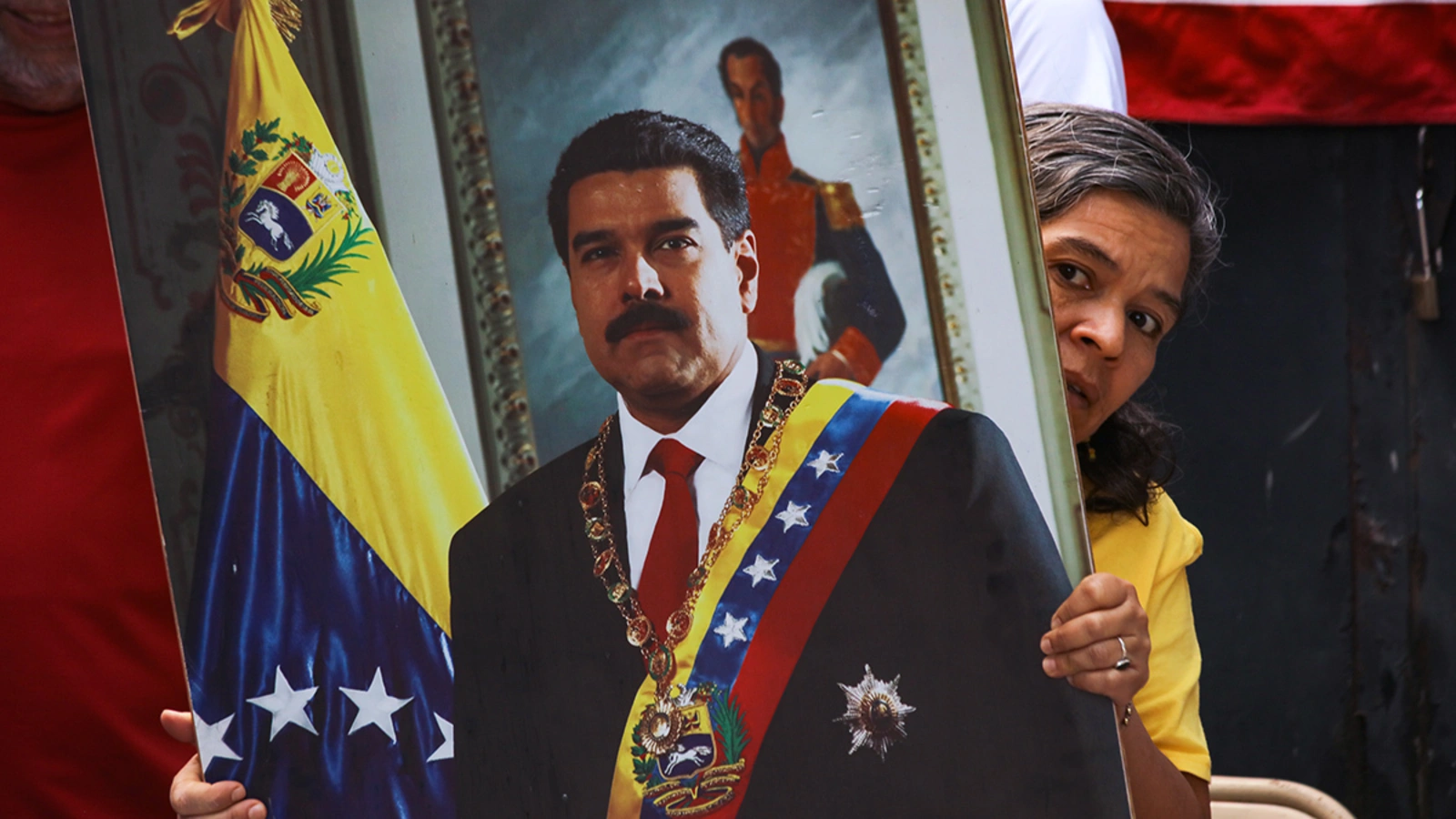
Nicolas Maduro is one of the most debated leaders in modern Latin America. He rose from a working-class background to the top of Venezuelan politics, first as a union organizer and later as a key figure inside Hugo Chávez’s movement.
After Chávez died in 2013, Maduro became president and has shaped Venezuela through years of sharp economic decline, major protests, international sanctions, and disputed elections.
In early January 2026, U.S. authorities said Maduro was captured in a U.S. military operation and brought to the United States to face federal charges—an event that triggered a new and unpredictable phase in Venezuela’s crisis.
Below is a complete guide to his life, political rise, presidency, controversies, and why his story matters far beyond Venezuela.
Early life and background
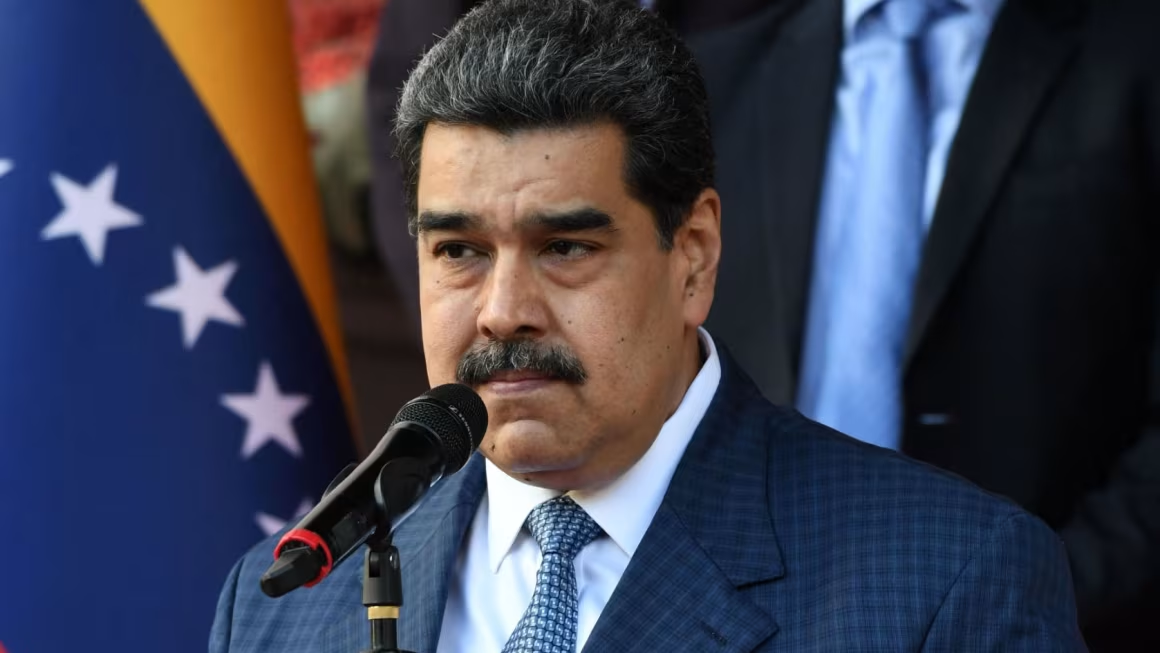
Nicolás Maduro Moros was born in Caracas, Venezuela, on November 23, 1962. He grew up in a country shaped by oil wealth and deep inequality. Maduro’s early years did not follow the path of traditional elites.
- He did not build his reputation through big business or legacy political families. Instead, he moved through working-class jobs and became known for activism and organizing.
- That background later became central to his public image, especially among supporters who viewed him as a “man of the people.”
Many profiles describe him as a former bus driver who entered politics through labor organizing. He often used that identity to connect with ordinary citizens and to frame his politics as anti-elite. Supporters present his story as proof that the state should empower workers, not private power.
Critics argue that personal biography cannot excuse poor governance, corruption, or repression. Either way, Nicolas Maduro early identity matters because it explains how he built loyalty inside a political movement that prized “popular” legitimacy and revolutionary symbolism.
From worker to union organizer
Nicolas Maduro first major step toward national influence came through trade union activity. Union networks in Venezuela can create strong political pipelines because they connect workplaces, neighborhoods, and activist groups. Maduro used organizing skills—mobilizing, negotiating, building alliances, and managing conflict—to grow inside left-wing circles.
This organizing style later showed up in how he operated as a politician. He relied heavily on party discipline, internal loyalty, and tight control of institutions.
- He also leaned on messaging that framed politics as a struggle between “the people” and “imperialism.”
- When Venezuela later faced shortages, inflation, and mass migration, Maduro still used the language of resistance and sacrifice. Supporters saw consistency. Opponents saw denial.
Union roots also helped Maduro gain credibility inside the broader Chavista movement. Chávez’s political brand emphasized workers, social missions, and state-led redistribution funded by oil revenue.
Nicolas Maduro fit that story. He did not look like an outsider joining for convenience. He looked like someone shaped by the same social base the movement claimed to defend.
Entry into formal politics
Nicolas Maduro entered formal politics during the period when Chávez’s movement consolidated power. He was elected to Venezuela’s National Assembly in 2000, marking a transition from street-level activism to state institutions. In legislative politics, he gained experience in coalition building and party strategy. He also learned how to use institutions to push an agenda.
Over time, he held prominent roles inside the legislature, including leadership positions. These roles placed him closer to Chávez’s inner circle and helped him become a trusted operator. Loyalty mattered in a system that increasingly depended on political alignment across the executive branch, courts, electoral authorities, and security forces. Maduro’s rise showed that Chávez valued reliability and ideological discipline as much as technical expertise.
This phase also matters because it built Maduro’s national profile. It introduced him to diplomatic work, state policy, and the daily mechanics of governance. It also embedded him deeper into the ruling party structure that later supported him when Chávez died. Without these years inside formal institutions, Maduro likely would not have stood as Chávez’s chosen successor.
The Chávez years and why Maduro mattered
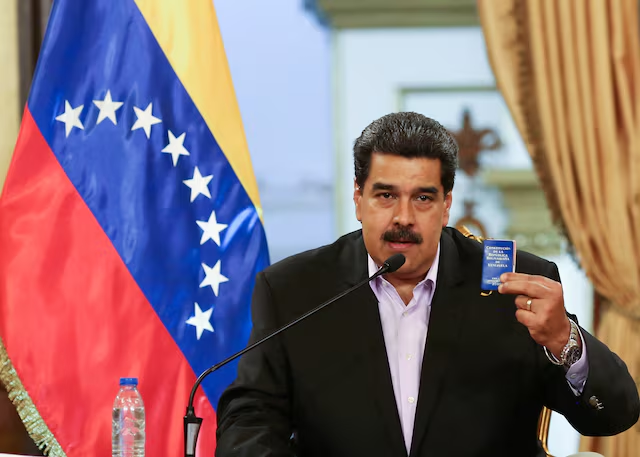
Hugo Chávez dominated Venezuelan politics for more than a decade. During that era, Nicolas Maduro served in high-impact positions that strengthened his trust with Chávez and the governing party. He became foreign minister and later vice president, two roles that placed him at the center of strategic decisions and international relationships.
As foreign minister, Maduro dealt with alliances that Chávez had built across Latin America and beyond. Those relationships included countries that opposed U.S. influence and favored state-led development models. Maduro learned the movement’s diplomatic playbook: present Venezuela as sovereign, frame sanctions as aggression, and seek partners willing to trade, invest, or provide political backing.
As vice president, he gained direct responsibility for day-to-day government coordination. When Chávez’s health deteriorated, succession became urgent. Chávez publicly signaled that Maduro should carry the project forward. That endorsement shaped Venezuelan politics after 2013 because it gave Maduro legitimacy among party loyalists, even while opposition forces challenged electoral results and institutional decisions.
This era also created expectations. Chávez had ruled during periods of high oil revenue. Maduro inherited the symbolism, but he did not inherit the same economic conditions. That gap became one of the core pressures of his presidency.
Becoming president in 2013
Chávez died in March 2013, and Maduro became interim leader before facing a special presidential election. He won the April 2013 vote by a narrow margin, defeating opposition candidate Henrique Capriles. The close result immediately intensified polarization. Maduro’s supporters treated the win as continuity of the revolution. Opponents questioned fairness and demanded stronger verification.
Maduro’s early presidency centered on protecting the Chavista coalition. That coalition included the ruling party (PSUV), senior state officials, and key security institutions. Maduro faced a hard reality: Venezuela’s economy depended heavily on oil exports, and the country had built large social spending programs tied to oil income. When oil prices fell and structural problems deepened, the government struggled to maintain stability.
In this period, Maduro’s leadership style became clearer. He leaned on state messaging, loyal institutions, and emergency measures. His government framed dissent as destabilization backed by foreign powers. The opposition framed government actions as authoritarian consolidation. Those competing narratives shaped the next decade, with Venezuela entering cycles of protest, crackdown, negotiation attempts, and renewed conflict.
How Maduro governed: institutions and control
Maduro’s presidency developed into a system where institutions often moved in alignment with the executive branch. After the opposition won the National Assembly in 2015, Venezuela entered a severe institutional conflict. Maduro’s allies retained influence through other state bodies, including courts and the electoral authority, creating a power struggle that reshaped governance.
His government also supported the creation of a Constituent Assembly in 2017, an institution critics described as a way to bypass opposition power. Supporters argued it defended the revolution. Opponents argued it weakened democratic checks. The dispute fueled protests and intensified international criticism.
Maduro also used strong rhetorical framing. He presented his rule as resistance against economic warfare, sanctions, and external threats. He portrayed opponents as agents of destabilization. This approach helped him keep the core base energized, but it also made compromise harder. When leaders treat political opponents as enemies, not competitors, negotiation becomes risky.
Over time, many observers described Venezuela as moving away from competitive democratic norms. Maduro’s supporters reject that label and argue that Venezuela faced a constant campaign of pressure and sabotage. The reality remains highly contested, and it sits at the heart of how the world interprets Maduro’s legacy.
The economic collapse and daily life impact
Venezuela’s economic crisis became one of the most visible parts of Maduro’s presidency. Shortages, currency breakdown, and collapsing purchasing power reshaped daily life. People struggled to find basic goods during the worst periods, and many households relied on remittances from family abroad.
Multiple factors fed the crisis: heavy oil dependence, reduced production capacity, policy failures, corruption claims, and the impact of international sanctions. Maduro’s government blamed “economic war” and sanctions, arguing that external pressure blocked recovery. Critics blamed deep mismanagement, weak institutions, and a system that rewarded loyalty over competence.
The crisis also triggered one of the largest migration waves in modern regional history. Millions of Venezuelans left to seek work, stability, and safety across Latin America, North America, and Europe. This changed politics across the region, pressured border systems, and influenced international debates about asylum and humanitarian support.
Even in later years, when some areas saw partial economic stabilization and more use of dollars in daily transactions, inequality became sharper. Some communities improved. Others remained trapped in low income, weak services, and uncertainty. This uneven reality shaped public opinion about Maduro more than speeches ever could.
Protests, security forces, and human rights claims
Maduro faced large protest waves, especially in 2014 and 2017. Protesters demanded political change, economic relief, and democratic guarantees. The government responded with security measures and arrests, arguing it needed to restore order and stop violence.
Human rights organizations and opposition figures have long accused Venezuelan security bodies of abuses, arbitrary detention, and repression of dissent. Maduro’s allies reject those claims or justify actions as necessary to prevent chaos. The conflict became a central part of Venezuela’s international image, leading many governments to condemn Caracas while a smaller set of allies defended it as a sovereign state under attack.
In January 2026, reports described a prisoner release process that freed some detainees while many remained in custody, according to advocacy groups and news reporting.These debates matter because they influence how the world treats Venezuela. Human rights allegations shape sanctions policy, diplomatic recognition, and legal actions. They also shape how Venezuelans inside and outside the country describe their own recent history.
Elections and legitimacy debates
Elections sit at the center of Maduro’s story. Maduro won in 2013 in a close race. He later claimed victory again in 2018 and then in the July 28, 2024 presidential election—an election widely described as deeply contested.
In 2024, Nicolás Maduro ran against opposition-backed candidate Edmundo González after authorities blocked leading opposition figure María Corina Machado from running, according to widely reported accounts. Many international observers criticized the environment and the result reporting process. Reports also noted that the opposition published copies of tally sheets from many polling places and argued those records showed a different outcome than the official announcement.
Maduro and state institutions defended the official results. They rejected claims of fraud. This created a familiar pattern: competing claims of legitimacy, international split recognition, and internal pressure through protests and repression.
For global audiences, the key point is simple. In Venezuela, elections have not only been about votes. They have been about control of institutions that count votes, certify results, and shape who can compete. That reality explains why election seasons often trigger national crises instead of peaceful transitions.
Foreign policy: allies, rivals, and survival strategy

Maduro maintained alliances built during the Chávez era and used foreign policy as a survival tool. He sought diplomatic recognition, trade partners, and political support in international forums. Countries that opposed U.S. influence often provided rhetorical backing and, at times, economic cooperation.
Maduro’s government also invested heavily in narrative warfare. It argued that Venezuela faced a coordinated attempt to remove its leadership and seize its oil resources. That argument resonated with some audiences worldwide, especially where skepticism of U.S. intervention runs deep.
At the same time, many Western and regional governments criticized Maduro over elections, human rights claims, and governance. This created parallel diplomatic worlds: one set of states engaging with his administration, another imposing sanctions, limiting recognition, and supporting opposition efforts.
Foreign policy became tightly linked to economic reality. When sanctions tightened, the government looked for alternative routes for trade, oil sales, and financing. When negotiations opened, it sought relief and legitimacy. That constant push-pull shaped the last decade of Venezuelan diplomacy and made Maduro’s international status a live question rather than a settled fact.
Sanctions, rewards, and international pressure
International sanctions became one of the defining external pressures on Maduro’s government. The United States built legal and financial actions targeting Venezuelan officials and networks linked to alleged corruption and trafficking. In August 2025, the U.S. State Department announced a reward offer of up to $50 million for information leading to Maduro’s arrest and/or conviction, under its rewards program.
Supporters of sanctions argue they punish wrongdoing and raise the cost of authoritarian behavior. Critics argue broad sanctions can worsen civilian suffering and push economies into deeper crises. The Venezuelan government blamed sanctions for major parts of its hardship, while opponents blamed the government’s policies and corruption.
By January 2026, News reported that Maduro was facing U.S. federal charges and had appeared in U.S. court after being captured in a U.S. operation.
No matter your politics, the sanctions era changed how Venezuela operated. It shaped oil trade routes, financial access, and diplomatic bargaining. It also pushed Venezuela into a long conflict where law, economics, and geopolitics blended into one story.
The 2024 election dispute in detail
The 2024 Venezuelan presidential election became a global headline because of the scale of the dispute. Reporting and summaries described an election environment where the state controlled key institutions and constrained opposition participation. The official electoral authority announced a Maduro victory, while opposition groups and outside analysts argued the tally evidence favored González by a wide margin.
This dispute mattered for three reasons:
- Legitimacy: Governments decide whether to recognize a leader based on their view of election credibility.
- Stability: Disputed results often trigger protests and crackdowns, raising the risk of violence.
- Negotiations: Any future power-sharing talks depend on which side feels it won.
Reports also said courts aligned with Maduro validated the official result, while the U.S., EU, and several Latin American governments rejected the validation.
For Venezuelans, this dispute did not stay abstract. It influenced arrests, exile decisions, media pressure, and daily fear. It also pushed the opposition into new strategies—some focused on elections, others focused on international pressure, and some on civil resistance. Maduro’s system, in turn, focused on holding the state together around a single center of authority.
Here is a simplified timeline of major events connected to Nicolas Maduro. It helps global readers place the story in order:
|
Year/Date |
Event | Why it mattered |
|
Nov 23, 1962 |
Maduro born in Caracas | Sets biography baseline |
|
Apr 2013 |
Wins presidential election after Chávez dies |
Starts Maduro era |
| 2014–2017 | Major protest waves and state crackdowns |
Deepens polarization |
| Jul 28, 2024 | Presidential election dispute |
Triggers legitimacy crisis |
|
Aug 7, 2025 |
U.S. raises reward to $50M |
Escalates external pressure |
| Dec 11, 2025 | Assembly moves toward ICC exit |
Signals legal confrontation |
| Jan 3–5, 2026 | U.S. capture + U.S. court appearance |
Shifts crisis into new phase |
The U.S. criminal case: what is publicly alleged
U.S. authorities have accused Nicolás Maduro of leading or enabling drug-trafficking networks connected to international cartels. News reported that Maduro faced multiple U.S. federal counts, including narco-terrorism conspiracy, cocaine importation conspiracy, and weapons-related charges tied to machine guns and destructive devices. News also reported Maduro has denied wrongdoing.
It is important to separate two things: allegations and proven facts in court. Allegations describe what prosecutors claim. A conviction requires legal proof under U.S. standards and a full judicial process.
Maduro’s defense has framed his capture as a “military abduction,” and the case is expected to include complex arguments about jurisdiction, evidence, and international law issues.
The broader impact goes beyond the courtroom. Legal action against a sitting or recently removed head of state changes how countries think about immunity, extradition, and the boundaries between law enforcement and military force. That is why the Maduro case has triggered debate at the United Nations and across international legal circles.
January 2026 capture: what reporting says happened
In early January 2026, major outlets reported that the United States carried out a military operation in Venezuela that led to Maduro’s capture and transfer to the U.S. News described loud explosions in Caracas and reported Maduro would face proceedings in Manhattan federal court.
Multiple reports said the operation raised sharp legal questions, including whether it violated international law and whether the U.S. executive branch had domestic authority to act without Congress. A News report noted the legality debate reached the United Nations.
Other reporting described internal political shifts immediately after the capture. News reported that Delcy Rodríguez was sworn in as Venezuela’s interim president on January 5, 2026.
This moment matters because it changes the crisis from “who governs Venezuela?” to “who governs Venezuela now, and under what conditions?” It also increases the chance of rapid economic, security, and diplomatic shifts. Markets react. Armed groups reposition. Neighbors prepare for spillover.
For ordinary Venezuelans, uncertainty rises even if some feel hope. The capture did not end Venezuela’s crisis. It simply opened a new chapter.
The ICC investigation and Venezuela’s Rome Statute move
International legal pressure has also shaped Maduro’s era. The International Criminal Court (ICC) has an active situation file related to Venezuela, and in June 2023 the ICC authorized the prosecutor to resume the investigation in “Venezuela I.”
In December 2025, that Venezuela’s National Assembly voted to repeal the law that ratified the Rome Statute, paving the way to withdraw from the ICC. Other outlets also reported on the move and connected it directly to the ICC’s ongoing investigation and Venezuela’s objections.
This matters for global audiences because it tests how international justice works when a state refuses cooperation. The ICC relies on member states for arrests and evidence support.
If a country withdraws, it may still face accountability for alleged crimes committed while it was a member, but cooperation becomes harder. The withdrawal push also signals how threatened Venezuelan authorities felt by international legal scrutiny.
Family, personal image, and political symbolism
Nicolas Maduro personal life often appears in political narratives because Venezuelan politics is heavily symbolic. His wife, Cilia Flores, has been a prominent political figure in her own right. State media and government messaging have often used family imagery to reinforce stability and continuity.
Nicolas Maduro also built a political persona tied to Chávez’s legacy. He frequently invoked Chávez in speeches and ceremonies to claim ideological continuity. Supporters saw loyalty. Critics saw dependency on a founding myth rather than modern solutions. This “inheritance politics” shaped how he governed. It pushed him to protect Chávez-era structures even as conditions changed.
Personal image became more important as economic hardship grew. When institutions lose trust, leaders often turn to symbolism.
Nicolas Maduro leaned on patriotic language, religious references, and anti-imperialist messaging to hold a coalition together. He also used large public events, security displays, and state announcements to project strength.
In the post-capture period described in January 2026 reporting, Maduro’s image shifted again—from political survivor to a leader physically removed from power and placed inside a foreign legal system. Whatever happens next, that reversal will remain one of the most dramatic turns in Venezuela’s modern political story.
Faqs About Nicolas Maduro
Who is Nicolas Maduro?
Nicolas Maduro is a Venezuelan political leader who became president in 2013 after Hugo Chávez’s death. He led Venezuela through the crisis, sanctions, and disputed elections.
When did Maduro become president?
He became interim leader after Chávez died and then won the April 2013 presidential election.
Why is the 2024 election controversial?
Reports describe major disputes over fairness, participation, and result reporting. Opposition evidence and outside analysis challenged the official result.
What happened in January 2026?
News reported that the U.S. captured Maduro in a military operation and brought him to the U.S., where he appeared in federal court to face charges.
What is the ICC issue related to Venezuela?
The ICC has an authorized investigation track related to alleged crimes in Venezuela, and Venezuela’s assembly moved in December 2025 toward withdrawing from the Rome Statute.
Final Thought!
Nicolas Maduro story is not only about one man. It is about how power survives when institutions fracture, economies collapse, and legitimacy gets disputed at every turn. He rose from union politics into Chávez’s inner circle, then inherited a state built on oil money, loyalty networks, and revolutionary identity.
His presidency brought years of hardship, migration, and confrontation with much of the West. The 2024 election dispute sharpened the global divide over Venezuela’s future. Then January 2026 reporting added an extraordinary twist: Maduro’s capture and U.S. prosecution moved the crisis into a legal and geopolitical battlefield.
Venezuela now faces questions bigger than any single election—who holds authority, how justice gets defined, and what stability could look like after years of trauma.