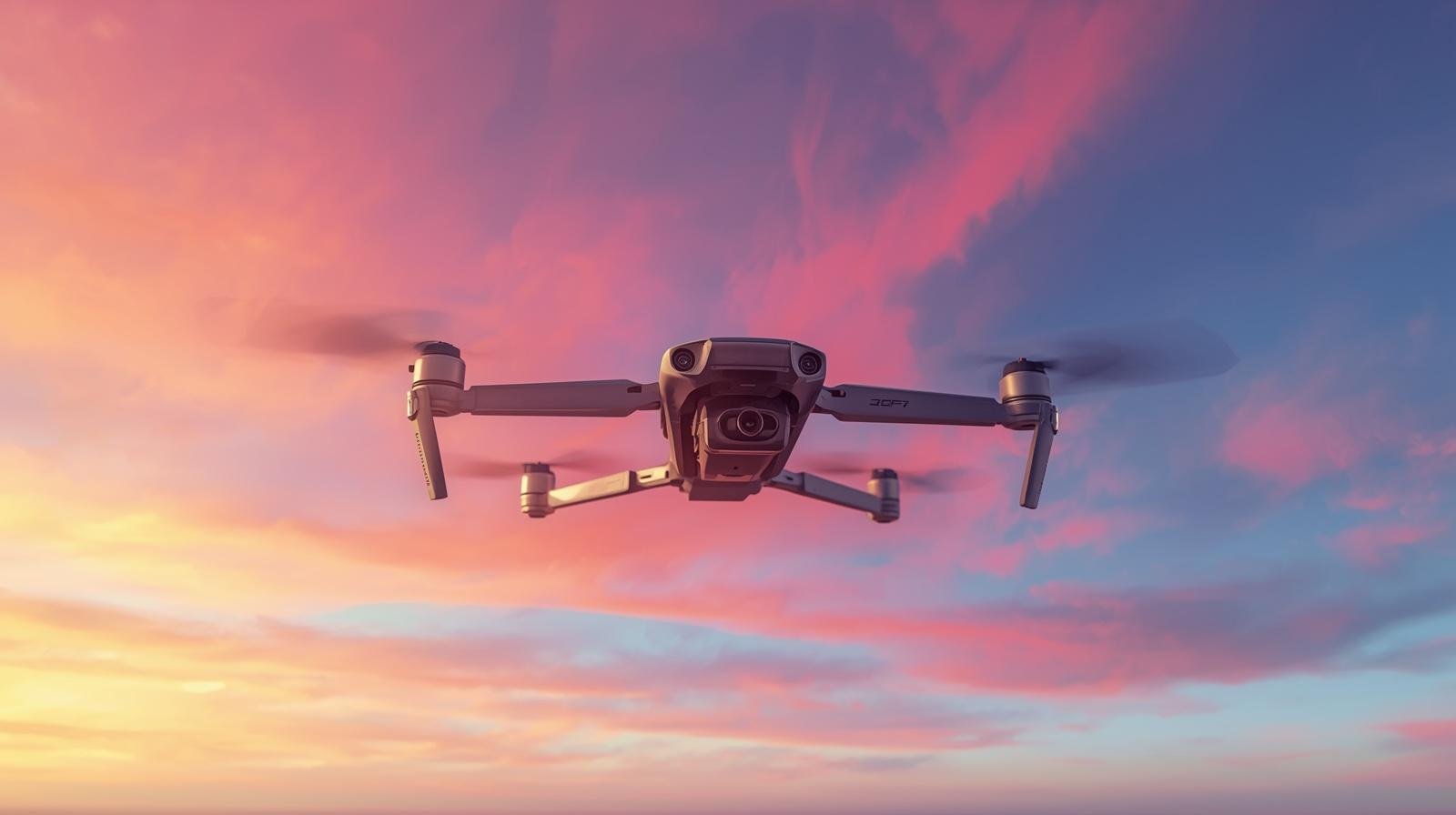
Drones have transitioned from being test projects to mainstream products that provide useful applications across a multitude of industries. Technically known as Unmanned Aerial Vehicles (UAVs), drones are flying vehicles that do not have a human operator on board and are instead operated by remote commands or by other automated means. Due to the rapid advancement of artificial intelligence, GPS, sensor technology, and wireless networking, drones are now very highly capable aerial vehicles that can acquire data, maintain surveillance, and perform automated functions.
At present, numerous organizations are using unmanned aerial vehicles for many different applications, including agriculture, distribution and transportation, filmmaking and editing, disaster response, transportation, inspection of physical assets, and environmental sustainability. Drones are becoming more capable and will continue to evolve in the global aerial robotics market.
This article discusses how drones work, the technologies involved in the operation of drones, and the future outlook for drone applications and innovations.
What Is a Drone?
Understanding Drones: A drone is an aircraft that does not have a pilot on board. Rather, it can be controlled using either a remote control, ground control, or software that controls a pre-programmed flight path. Drones are generally classified as part of a larger system called the Unmanned Aircraft System (UAS).
The UAS consists of the aircraft, the communication links with it, the ground control station, various sensors, various navigation systems, all the equipment needed to access the aircraft and operate it as well as all of the people involved in operating it. Drones may be small and recreational in nature (for example, quadcopters), or they can be large commercial drones (e.g., UAVs) for surveying, military operations, etc.
Core Technologies for Drones to Fly, Navigate, and Execute Tasks
There are various technologies that are necessary for drones to operate, including:
Flight Controller
The flight controller is the brain of the drone. It processes input from all the various sensors on the drone and controls the motors so that the drone can be stable and in control while flying.
Propulsion System
The propulsion systems consist of:
- Electric brushless motors
- Propellers
- Electronic speed controllers.
These three types of devices work together to create thrust and allow the drones to travel in all directions.
Navigation Systems
Most drones use GPS modules to find their locations, navigate along planned flight paths, navigate around other objects, and avoid obstacles. Many more advanced drones use GLONAS or Galileo satellite navigation systems to have a more accurate way of locating themselves and following their routes.
Sensors & Cameras
Drones use many types of sensors in order to navigate and gather data. Sensors on drones can include:
- Gyroscopes
- accelerometers
- Barometers
- LIDAR sensors
- Optical Cameras and thermal cameras
These sensors help drones avoid obstacles, stabilize during flight, and capture high-quality aerial data.
Communication Systems
Drones communicate with operators using radio frequency (RF) transmission, Wi-Fi, or satellite communication. This allows operators to monitor flight data and control the drone in real time.
How Drones Function
Drones fly because of two forces acting on their bodies: lift and thrust from the spinning propellers. To keep the drone in a stable position during flight, the flight controller will continue to modify the speeds at which the motors are running.
The general workflow is as follows:
- Command Input – Remote controllers or flight planning software are used by the mission operator to issue the drone a flying instruction.
- Sensor Data Processing – The drone’s sensors transmit information regarding altitude, orientation, and speed to the onboard computer (Flight Controller).
- Flight Controller Motor Speed Adjustment – Using data obtained from the sensors, the flight controller adjusts one or all motor speed inputs.
- Motor Response – Drone propellers rotate and provide thrust due to the resulting motor speed input(s).
- Navigating – GPS and other sensors keep the drone on course to ensure it continues to fly as planned; allowing autonomous flying with pre-planned routing using AI-based navigation systems is available to most high-end drones.
Types of Drones
There are several types of drones, each designed for a specific purpose.
Multi-Rotor Drones
Multi-rotor drones (quadcopters, hexacopters, etc.) are commonly used for photography and inspection work. They are simple to control and very easy to maintain; in addition, they hover in place without requiring you to have any additional equipment (such as a launch pad or landing gear).
Fixed-Wing Drones
As the name implies, fixed-wing drones have wings like an airplane and are capable of flying much longer distances than multi-rotor drones. They can also be used for mapping, surveillance, and environmental monitoring.
Hybrid VTOL (Vertical Take Off and Landing) Drones
Hybrid VTOL drones combine the advantages of both multi-rotor and fixed-wing aircraft. They can take off vertically, transition into forward flight, and operate over long distances.
Key Industries using Drone Technology
Drone technology is being used in many industries today because of its cost-effectiveness and ability to collect aerial data quickly and easily.
Agriculture
Drones are commonly used by farmers for precision agriculture, crop monitoring, irrigation, and pesticide applications. The images taken by drones allow farmers to determine how healthy their crops are as well as how many pounds of produce will be produced from their crops.
Infrastructure Inspections
Since drones can inspect vital infrastructure (bridges, power lines, wind farms, and pipelines) without the need for manned inspections (which can be quite dangerous), companies are increasingly deploying drones for this purpose.
Logistics/Delivery
Many companies are currently experimenting with drone delivery systems that will allow them to deliver small packages as quickly as possible.
Filmmaking and Media
Drones equipped with high-resolution cameras are widely used in aerial cinematography, providing dramatic perspectives previously possible only with helicopters.
Disaster Response
Emergency teams use drones for search and rescue, disaster assessment, and wildfire monitoring.
Obstacles to Drone Technologies
Regulatory issues present a challenge to drone technology, as current regulations for pilots require compliance with a range of aviation regulations, as the regulatory authorities are attempting to ensure that drones are able to safely share the airspace occupied by aircraft. Another challenge facing drone technology is battery technology and the ability to operate for use on an airline in a commercial capacity without being recharged.
Drones utilize a wireless communications network and therefore have the potential for their network being hacked and used in a way that could pose a public safety risk if not properly secured.
Future Direction of Drone Technology
Advancements in artificial intelligence (AI), robotics, and autonomous systems will shape the future of drone technologies. Some key developments that will influence the next generation of UAVs are discussed below.
Fleet Autonomy for Drones
Future drone systems may consist of fleets of drones that work together to accomplish complex tasks, such as performing mass inspections or creating large delivery networks without any human involvement.
Air Mobility for Urban Areas
Companies are also working to develop passenger carrying drones and/or aerial taxis that can be utilized in the future as part of the urban transportation system.
Integration with Infrastructure for Smart Cities
Future drone technologies will most likely operate in conjunction with smart city infrastructure to assist with monitoring of vehicle movement and safety, provide security, and collect traffic and environment-related information.
Real-Time Data Analysis Through AI
Using artificial intelligence gives a drone the capacity to not only collect data but also assess the information in real-time will create powerful new tools for several industries (agriculture, construction, and environment) to improve the efficiencies of their current operations.
Conclusion
Drones are a significant technological development in aviation and robotics; they will change the way many industries, including agriculture, logistics, and disaster relief, operate. The development of drones includes advances in artificial intelligence, new sensor technologies, and the ability to navigate independently through GPS. As the regulatory climate continues to change and new technologies like 5G, battery systems, and AI assist navigation systems become more prevalent, drones will be incorporated into everyday business operations from many different types of businesses.
By learning about how drones work and what impact the continued development of drone technology will have on the economy, business owners and individuals can prepare for a future in which automation based on flying machines will contribute significantly to our economy.